
-
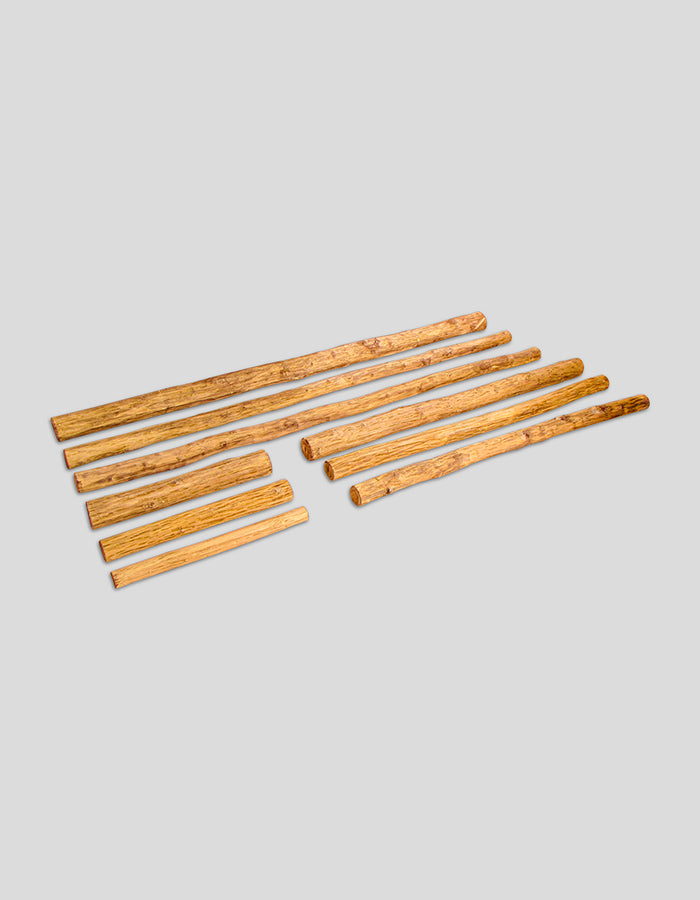
Robinienstämme, Robinie-Rundholz
-
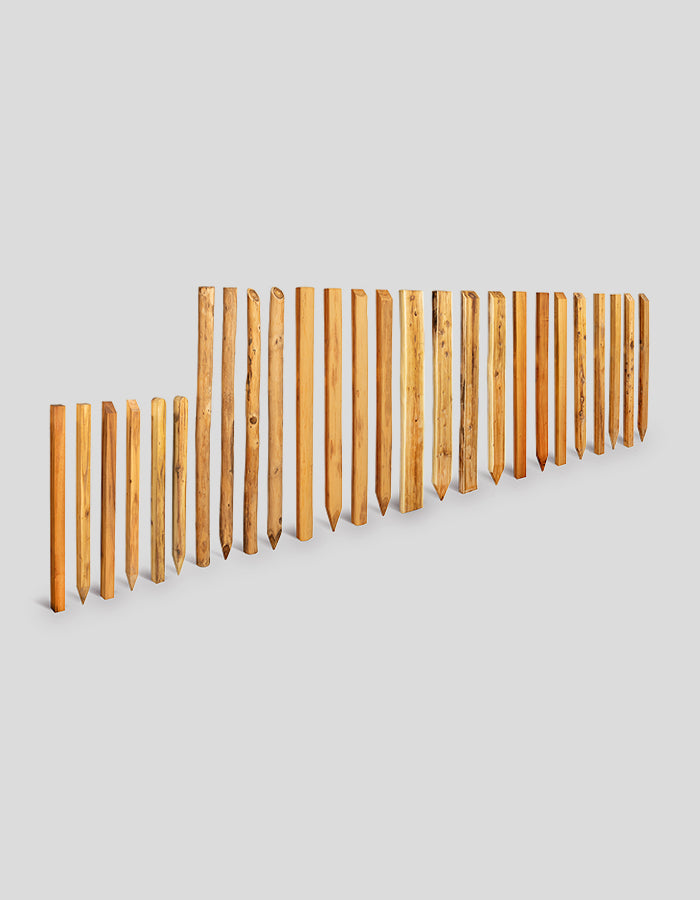
Robinienpfähle und Robinienpfosten
-
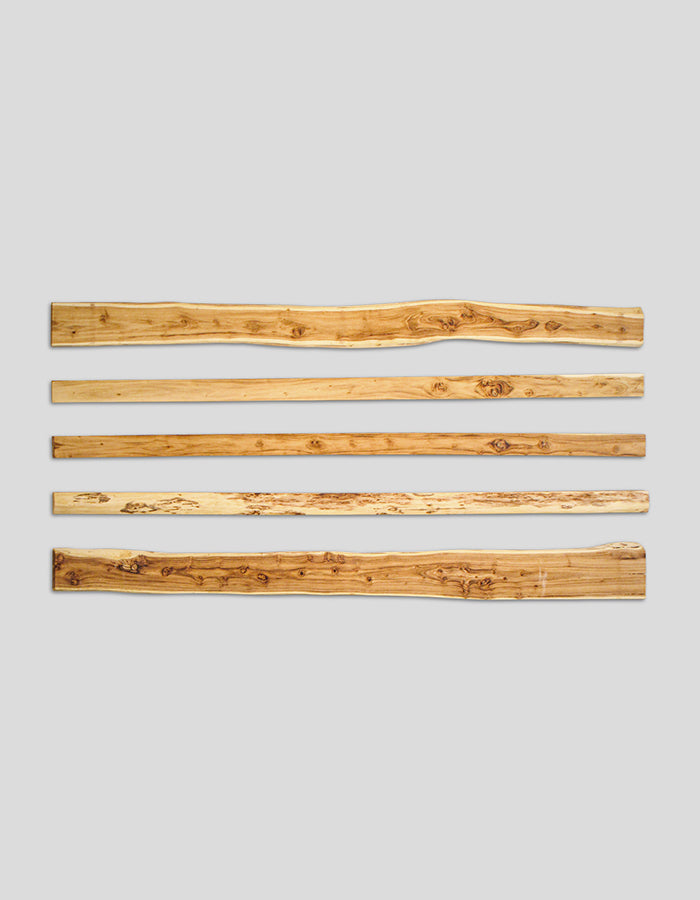
Bonanzabretter, Zaunbohlen, Zaunriegel
-
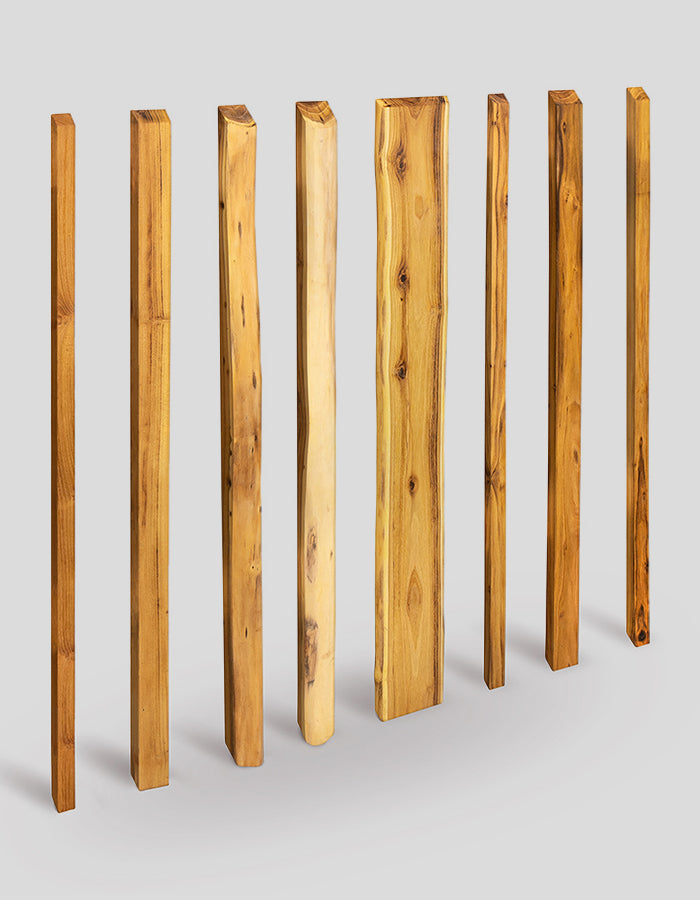
Zaunlatten, Zaunbretter, Staketen
-
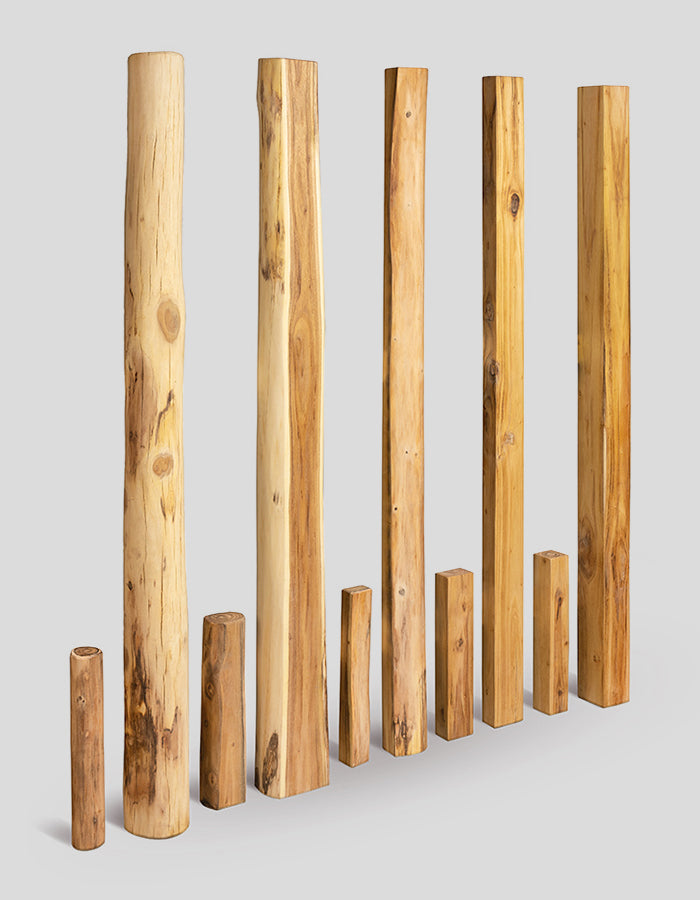
Stelen, Stützwände, Poller
-
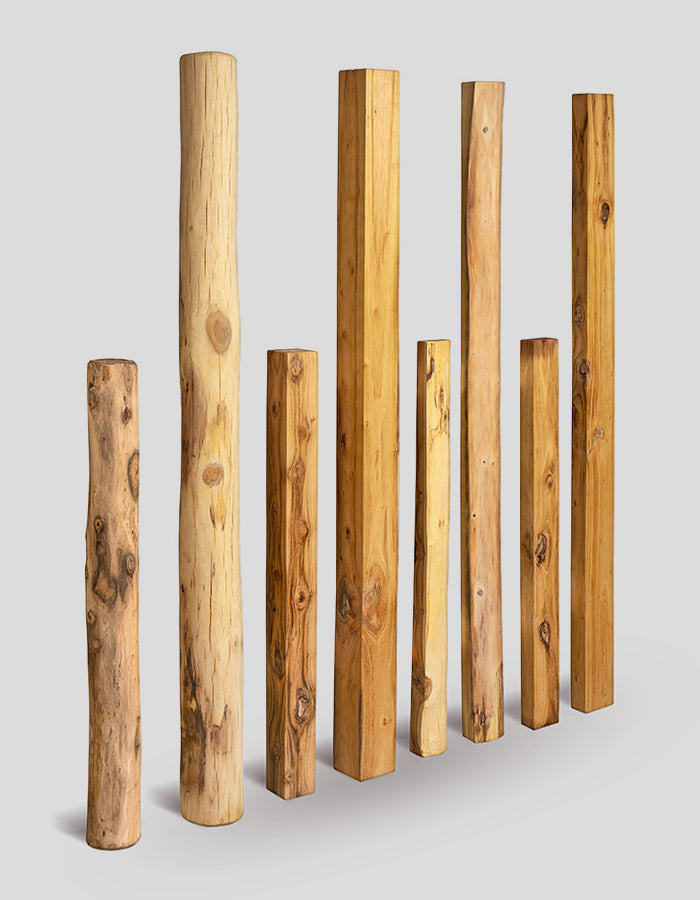
Stelzen, Rammpfähle, Unterzüge
-
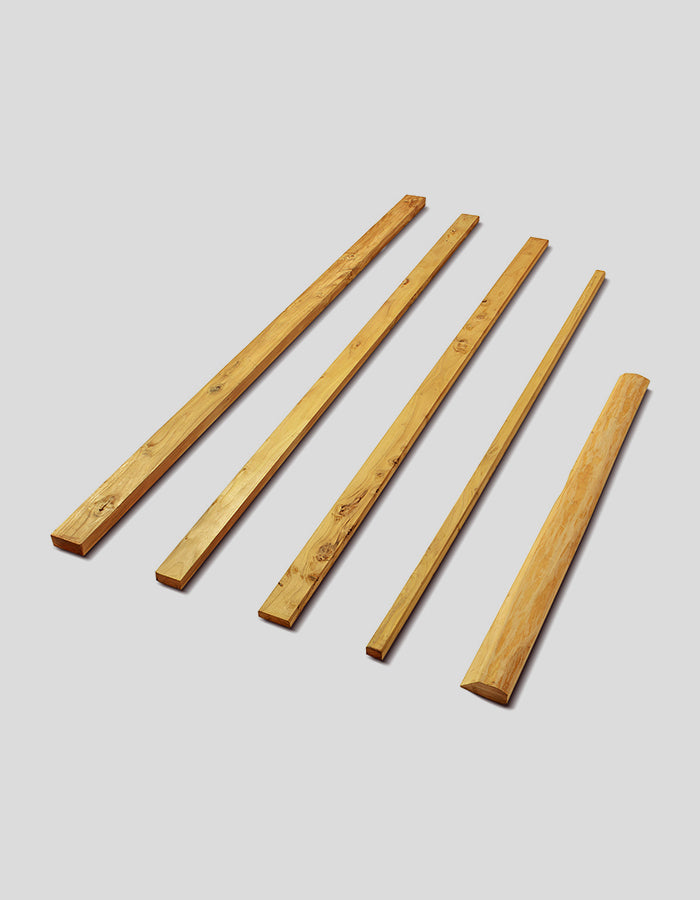
Leisten, Latten, Bretter , Bohlen
-
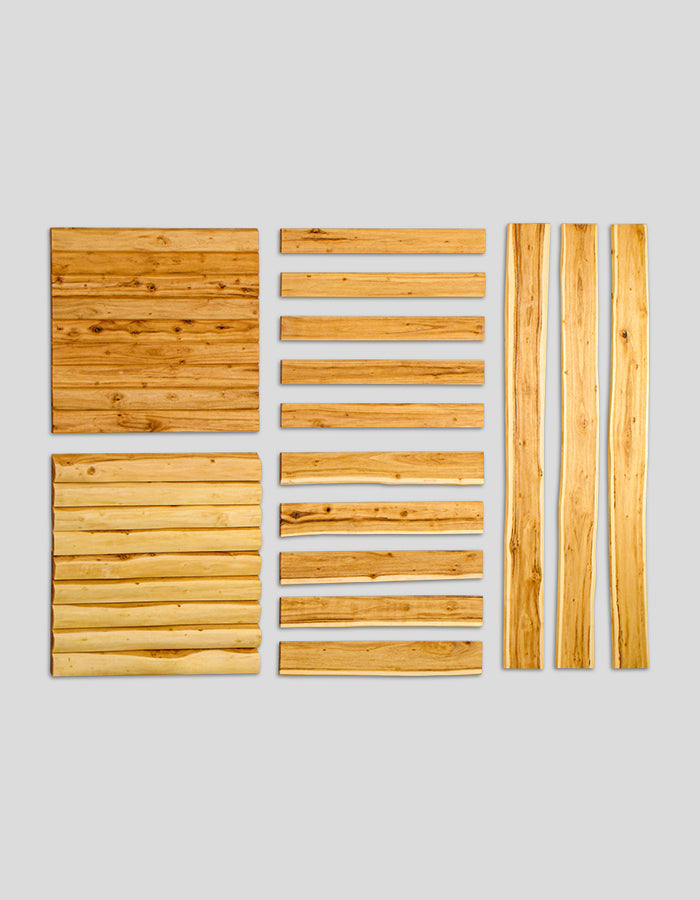
Fassadenbretter und Holzlamellen Fassade
-
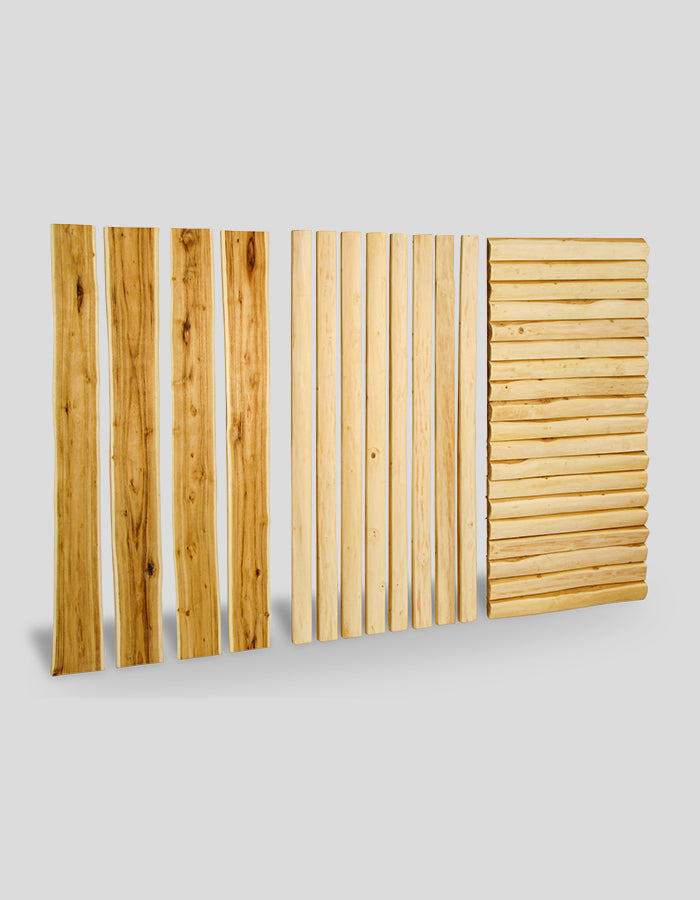
Schwartenbretter, Schwarten, Blockhausbretter
-
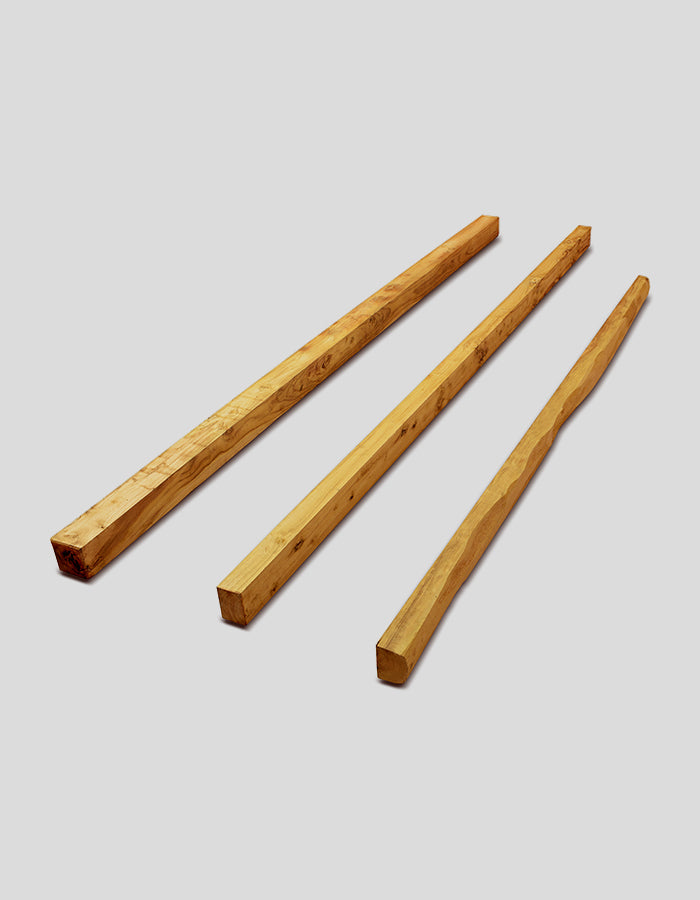
Kantholz und Balken
-
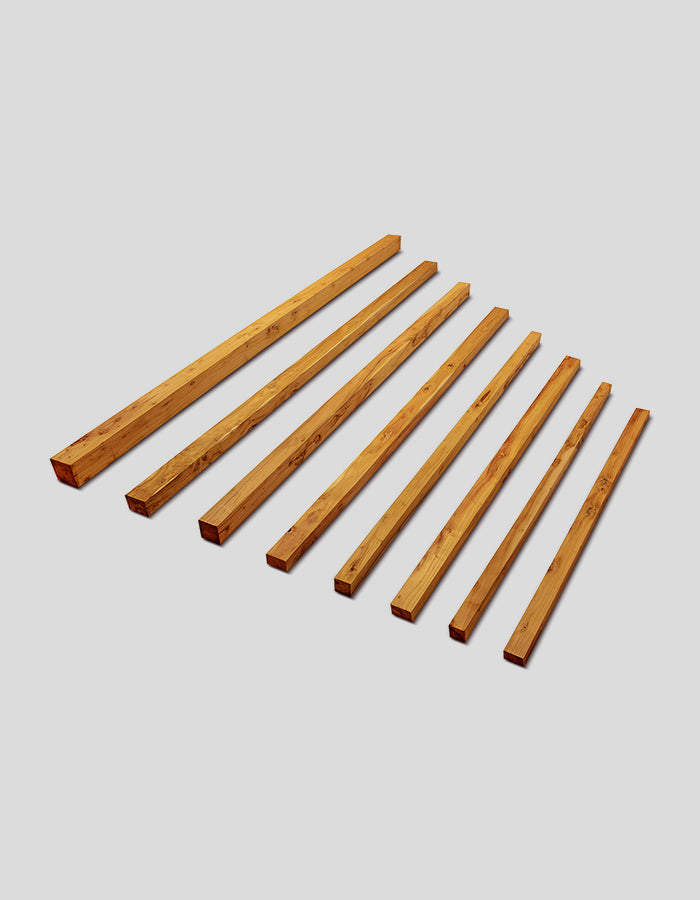
Konstruktionsholz gehobelt
-
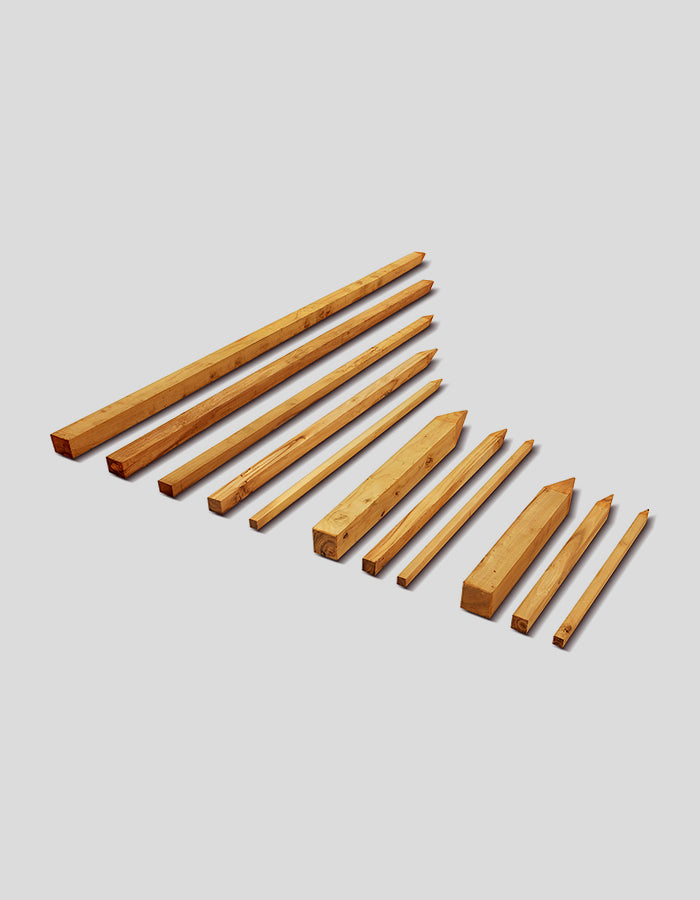
Weinbergpfähle, Pflanzpfähle & Co.
Robinia wood - the incomparable wood for outdoors
Robinia is essentially the only wood truly suitable for outdoor use without any chemicals involved. Its special suitability for outdoor use is due to the extraordinary durability of robinia wood, its natural resistance to rot and decay under regular moisture – see Properties of Robinia Wood.
The few tropical woods that are as durable as robinia wood are mostly excluded for price reasons – and also due to their ecological questionable nature.
Robinia pseudoacacia L. – this is the botanical name for the robinia tree – is widely distributed, especially in France, Italy, Austria, and throughout Southeast Europe. In Germany, robinia is primarily found as a tree in avenues and parks, due to its white to pink flower clusters in April to May, as well as its fresh green light foliage and its low maintenance requirements.
Robinia wood is the only native wood that has durability class 1; otherwise, only a few expensive and problematic tropical woods are as durable, e.g., teak. For comparison: oak has durability class 2, larch has durability class 3, and spruce has durability class 4. Robinia wood is like running a marathon.
In contact with the ground, e.g., for fence posts, the lifespan of robinia wood is at least 20 years, often significantly more. It depends on the moisture content and the composition of the soil.
Without ground contact, robinia wood lasts 60 to 80 years – unprotected outdoors, practically unlimited when protected.
Robinia wood is therefore the wood for outdoors par excellence, the original wood for outdoors, which requires no chemical treatment and no protective coating.
The advantage of robinia wood as wood for outdoors also lies in its maintenance-free nature. Robinia wood does not need and does not want any coating. Over time, a stable silver-gray patina forms naturally on the robinia wood. Any coating, on the other hand, becomes brittle over the years and peels off. With robinia wood – coating saved.
Robin wood also known as acacia wood?
Yes and no. The popular name "false acacia" comes from the botanical name of the black locust tree; this was then shortened to "acacia." When someone speaks of acacia posts, they likely mean black locust posts.
Acacia wood is not always the same as black locust wood. Strictly speaking, acacia wood refers to the wood of the tropical Acacia mangium L. Therefore, the actual acacia wood comes from tropical plantations, primarily in Southeast Asia. From tropical acacia wood, garden furniture, laminated wood panels, and laminated boards are offered, as well as, for example, wooden tiles.
The wood of the tropical acacia is also quite hard and durable, although it is by no means as hard and durable as that of our European black locust. The downside of the actual acacia wood is its origin from tropical plantation agriculture.
Black locust and tropical acacia are easy to distinguish. Black locust is a strongly grained golden-yellow wood. In contrast, the tropical acacia is reddish-brown and has little grain.
Universal garden wood for all tasks that arise in the garden
Robinia wood is a wonder of nature, a "gold medal winner" in all disciplines for garden wood – durability, hardness, fracture resistance, split resistance. Thus, Robinia is the universal garden wood for all tasks that arise in the garden. This garden wood is indestructible.
This wood for the garden excels not only in durability but also in low maintenance and naturalness.
Wood for the garden is also recommended for its easy processing: sawing – drilling – screwing. However, please use only stainless steel screws for the Robinia wood, not just galvanized screws. Otherwise, the screws will rust (zinc does not hold up sufficiently), while the Robinia wood remains in excellent condition.
Robinia wood as a unique wood for the garden allows you to create many things in your garden with creative imagination and craftsmanship.
Wood for the garden is also the most natural. Nature for nature. Harmony is another word for beauty.
Durable, practical, beautiful – the garden wood Robinia.
Robinia is the ideal wood for fences of all kinds.
More and more often, black locust is found as wood for fences. When used as fence wood, not only the durability of black locust counts, but also its outstanding strength, unmatched by any other wood.
Black locust truly deserves to be the most popular fence wood – because of its durability, low maintenance, and naturalness.
Black locust as wood for fences is ideal for any type of fence – street fence, garden fence, paddock fence – and any fence design – rustic bonanza fence, country picket fence, traditional slatted fence, elegant post fence, privacy fence.
The fence wood black locust is available here in all shapes and sizes needed for a fence, regardless of the design. There are various round posts, half-round posts, square posts, bonanza posts. Fence boards can be rough-sawn – so-called bonanza boards – or planed. Fence rails come in rectangular or half-round shapes or can be rough-sawn. Fence slats are square or rectangular or are half-round pickets.
You will not regret using black locust as wood for fences. Pure joy is guaranteed with fence wood black locust.
Established as wood for playgrounds
Black locust is the most suitable wood for playgrounds. It is the almost exclusively used playground wood. Here, playground is understood very broadly, from sandboxes to swings, climbing frames, tree houses, to entire playground facilities, including their borders, seating, etc.
The wood for playgrounds is made special by the unique properties of black locust wood. The wood for playgrounds should be very durable, as such a playground is not a cheap affair; this is best fulfilled by black locust wood.
Playground wood – for swings, climbing frames, tree wood, and more – must be very stable to ensure safety; this is best fulfilled by black locust wood.
A wood finish would not be suitable for playgrounds, as it would wear off quickly in the heavily used areas. Black locust wood does not require a finish.
Last but not least, it is the tactile quality that makes wood for playgrounds preferable over plastic or metal.
All playground wood materials can be found here: black locust logs, round posts and square posts, beams and timber, wood slats, boards, planks.
The predestined wood for garden constructions and wood for water constructions
The exceptional properties of robinia wood make it ideal as wood for garden constructions, especially in contact with the ground, as well as wood for water constructions. A wide variety: retaining walls, palisades, path and terrain steps, terraces, canopies, garden sheds, carports, walkways, bank reinforcements, stilt houses.
For this purpose, there is a complete range of wood for garden constructions and wood for water constructions: retaining wall posts, driven piles, poles, stilts, beams and square timber, girders, boards and planks, also slabs and log cabin boards.
Crafting and carpentry for the garden – made from black locust wood
You want to build a garden bench or an entire grilling area. The top of a garden table needs to be renewed. A birdhouse is to be created. And it should be durable. Then only robinia wood is recommended.
For this, you will find a rich selection of carefully chosen planed robinia wood – Laminates, strips, boards, and construction wood.
Robin wood instead of artificial material
Ecology – the preservation of the natural environment – is and remains a question of survival for humanity, despite some exaggerations.
Wood is the most ecological material there is. It grows without the use of artificial energy. CO2 is consumed. Wood naturally decomposes without residue in the natural cycle. And, forests provide the habitat for the preservation of biodiversity.
In contrast, the industry loves plastic and metal, as they are easy to produce and wear out quickly, except for stainless steel.
People must counteract this with their environmentally conscious decisions as buyers. By deciding what to buy, people decide how ecologically products are made.
Robinia wood does not require chemical treatment – nothing more than strong and hardly degradable toxins against microorganisms – in contrast especially to cheap high-pressure treated softwood.
Robinia wood is therefore also the most ecological wood for gardens. That's why: buy Robinia wood.
Buy Robinia wood - here at robinia24
Here you can buy any type of black locust wood, round timber in various designs, sawn timber in different shapes, planed timber from small to large. Buy black locust wood for any uses in the garden, in fence construction, in playground construction, in landscaping, and in hydraulic engineering. Our rich selection – an invitation to buy black locust wood.